
Beetroot Cylindrica
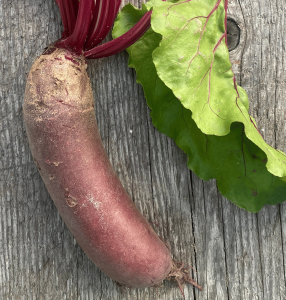
Our Cylindrica Beetroot variety was found in an organic shop in 2011, we sliced the top and let it go to seed. This seed has been with us for more than a decade.
Cylindrica Beetroots are a winner in the kitchen due to their cylinder root, fitting perfectly in a jar for pickling and are easily slice for baking. With their deep red colour, they remain sweet and crunchy even when mature, only going woody when they are going to seed.
SOW: Autumn/ Winter/Spring/Late Summer
CROP ROTATION: Spent Bed, Second year bed.
HARVEST: 60 days or when there is a sizeable tuber easily seen as they will grow above the ground. Store in the ground and harvest as needed. Sweeter with frost.
NOTE: When transplanting (like most root vegetable) do not disrupt the roots, plant the entire pot. Moist soil is the key for better growth.
Carrot Orange
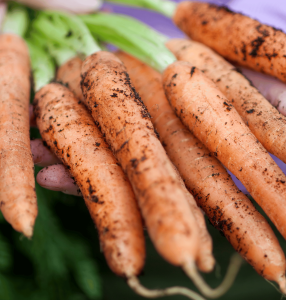
Our Carrots are a favourite, the seed has been collected only for the sweetest carrots for over a decade. Our Carrots have also been chosen for their size and shape, they are small in size and round at the ends, they are perfect for shallower soil. Not many of our Carrots make it to the kitchen as it is the perfect little meal while you’re busy in the garden.
SOW: late Summer/ Autumn/ Winter/ Early Spring
CROP ROTATION: Spent Bed, Second year bed.
HARVEST: 60 days or when there is a sizeable tuber. Store in the ground and harvest as needed.
NOTE: When transplanting like most root vegetable do not disrupt the roots, plant the entire pot. Moist soil is the key for better growth.
Garlic Elephant
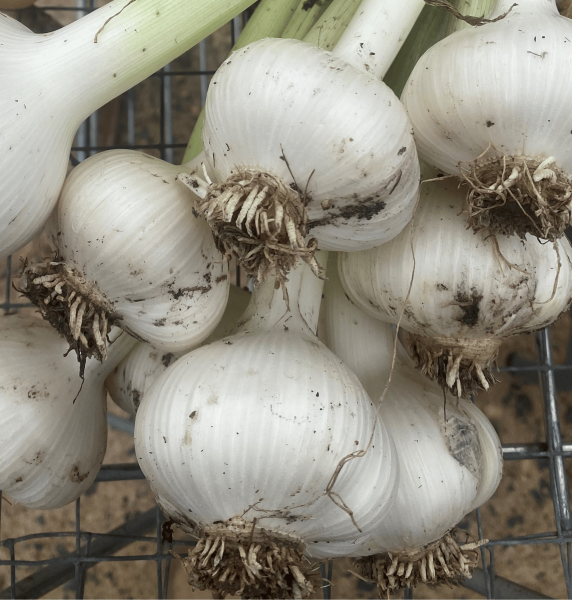
Elephant Garlic comes from a the caltivar Allium ampeloprasum which is known as wild leek. We have chosen this garlic due to its large clove size up to 500gs. Compared with other garlic it is easy to peel it also has a much milder flavour then other garlic. When you plant these garlic cloves sometimes it produces a round and other times a full garlic bulk. Pop the round in the ground for another season to produce a full garlic clove or eat it, it just round garlic.
SOW: Late Summer/ Autumn
CROP ROTATION: Spent Bed, Second year bed, although the better the soil and water the bigger the bulb.
HARVEST: Spring, remove the Scape (flower head). Harvest when three leaves have turned yellow.
Note: Moist soil is the key for better growth.
Leek Giant
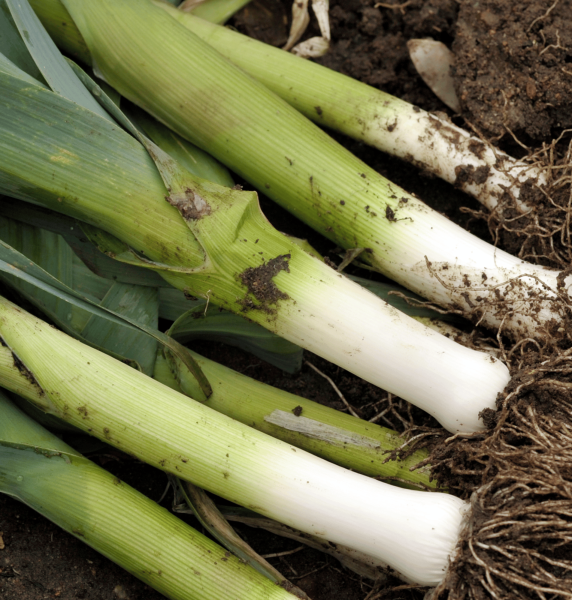
Use your Leek as an alternative to onions; that won’t cry when you’re cutting it. It has a delicate mild flavour, thinly slice the stalk and add it to soups, stir-fry’s, quiche or any of your favourite meals. Leeks are slow to bolt, store in the ground and harvest as needed, by cutting off just above the roots.
SOW: Autumn/ Spring
CROP ROTATION: Spent Bed, Second year bed.
HARVEST: 120 days or when there is a sizeable tuber.
Note: Moist soil is the key for better growth.
Onion Purplette
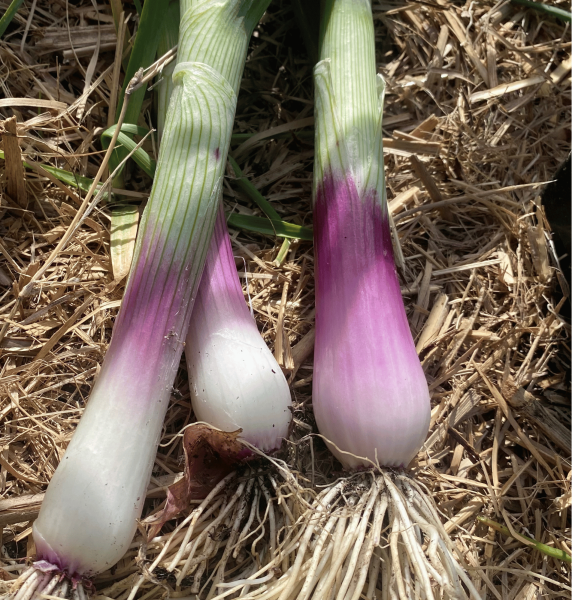
Our Onion Purplette was discovered at a farmers’ market, we sliced the top and let it go to seed. This seed has been with us for more than a decade.
This allium is a sweet little purple bulb like its cousin the purple storing onion is flavour is sweet, not bitter. They will mature quickly and like most of our onions slice it above the roots leaving the roots in the ground so you can have a second harvest. Purplettes will not store in your cupboard like your other onions so store it in the garden and pick it when your ready to eat.
SOW: Autumn/ Spring
CROP ROTATION: Spent Bed, Second year bed.
HARVEST: 120 days or when there is a sizeable tuber. Store in the ground and harvest as needed, by cutting off just above the roots.
Note: Moist soil is the key for better growth.
Parsnip White Slowbolt
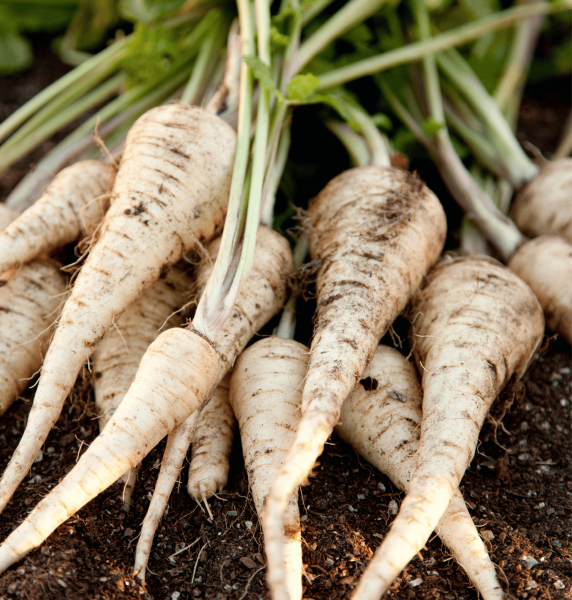
When you grow your own Parsnip you will suddenly realise that what you have tasted elsewhere, is not a Parsnip. Parsnips grown in our highland climate, particularly the ones exposed to frost have a sweet delicate flavour. They are perfect of soups, curries and casseroles but if your really want to enhance its beautiful flavour roasting is the only way.
SOW: Autumn/Winter/Summer/Spring
CROP ROTATION: Spent Bed, Second year bed.
HARVEST: 120 days or when there is a sizeable tuber. Store in the ground and harvest as needed.
Note: Don’t collect seed from parsnip that goes to flower before it has created a sizable root, keep Parsnip’s slowbolt.